
In the present study, a stopwatch was used for measuring time for ST, which can vary in time measurement compared to other sophisticated equipment. Therefore, future research can use more sophisticated equipment like photocell equipment for sprint test. Also, the isometric strength of the quadriceps was used in the present study; future studies can use concentric and eccentric strength measurements. The present study recruited soccer players from university and soccer clubs; therefore, they were not elite or high-performance players. The difference in the performance of amateur and elite players has been reported in previous studies favoring elite players62–65.
Muscular Power
The dimensions and route directions for the ICODT were applied in accordance with established methods (Negra et al., 2017a). The ICODT involves placing 4 cones to indicate a square area that is 10 m long and 5 m wide. The start and finish gates are positioned on the opposite side to indicate the two running points. Each participant had to run as quickly as possible from the start gate, follow a planned route and slalom through the markers without knocking them down or cutting over them.
Study Design:
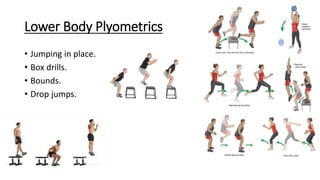
Beginners can start with inverted rows using a table or bar set at waist height. Box Step-Ups with Light Hop involve stepping onto a low, stable platform (6–12 inches high), then performing a small, controlled hop on the elevated foot before stepping down. This will allow the athlete to carry-over more of their training advancements to real life sports or other athletic activities that require such skills, especially if the athlete is participating in a sport that normally requires explosiveness, such as basketball or boxing. The most common plyometrics exercise is the box jump, of which is considered the poster-child of plyometrics.
- Your muscles work similarly during plyometrics, which is why these exercises can significantly improve power output, reaction time, and explosive strength when performed correctly.
- The subgroup analysis pointed to similar and statistically non-significant training effects for athletes and non-athletes comparing resisted and traditional plyometrics.
- There were main effects for time for all testing measures indicating general, overall improvements.
- This idea was used by Makaruk et al. (2010), who found that drop jump training showed a positive tendency for changes in force at peak power during the CMJ test.
- They also learn specific skills, such as how to protect themselves from injuries51.
- Telling your trainer if you have suffered an injury recently will let him know what kind of movements you are allowed to do.
Table 1.
The plyometric program should use the principles of progression and overload. This can be accomplished by manipulating the volume dosage (reps, sets, weight, etc.) of many different variables. The quality of the work is more important with plyometrics than the quantity of the work. In order to recruit the fast twitch fibers, the intensity of the work should be performed at high levels of intensity 80‐100% maximum volitional contraction (MVC).
Plyometrics for Speed and Agility: Pros and Cons
Four meta-analyses reported positive effects and best app for tracking nutrition three reported unclear differences on muscular strength performance (1RM or isokinetic tests), for upper [57] or lower limb [48], after plyometric training. A large and unclear effect was observed for healthy individuals [41, 57] and also healthy adolescents [37], a moderate effect for basketball players [53] and individual sport athletes [48], and a small effect for athletes from general sports [39]. Only one study showed that an unclear effect was also observed for hamstring/quadriceps strength ratios at 60 and ≥ 120°/s in basketball players [53].
Sample Weekly Plyometric Workout Plan
A shorter time to rebound and electro‐mechanical delay allows for effective force transmission from the eccentric pre‐stretch to the concentric power performance phase of the plyometric movement. Realizing the fast angular velocities and tremendous forces required in various activities of daily living and sporting activities, illustrates the need for plyometric training in preparing the patient or athlete for return back to their activities. Rehabilitation and conditioning programs are designed to return patients and athletes back to their respective activities as safely and quickly as possible based on functional specific activities. Plyometric exercises should play a critical role in this important role to develop power for performance.
Post navigation

Participants completed three trials, the highest score being recorded as the measurement of maximal back strength under isometric conditions. Previous test retest reliability scores have been shown to be reliable in a similar athletic pediatric population (Hammami et al., 2016b; Chaouachi et al., 2017). For the THT, a tape measure was fixed to the ground, perpendicular to a starting line. Participants were instructed to stand behind the starting line with their non-dominant leg forward and the dominant leg off the ground. The leg used to kick a soccer ball was identified as the dominant leg. The subject performed three consecutive maximal hops forward on the same leg to reach the maximal horizontal distance.
Plyo pushup
Participants were screened and recruited by an experienced physiotherapist with more than 17 years of experience in assessing and managing sports and musculoskeletal disorders. The selected participants were young male athletes aged 18–25 years who participated in any level of soccer training. Participants with a cardio-respiratory disease, impairments of the spine or lower extremities, a current injury, a history of any lower limb surgery, or musculoskeletal pain as confirmed by medical and physical examinations were excluded from the study. Forest plot summarizing the effects of traditional vs. assisted plyometrics on vertical jump height. Forest plot summarizing the effects of assisted plyometrics vs. control on vertical jump height. Excessive plyometric training sessions without sufficient recovery time can lead to overtraining, resulting in fatigue, decreased performance, and an increased risk of injuries.
How to Do 8 Different Plyometric Exercises
However, calisthenics can also be used to build lots of power and muscle in more of a bodybuilding style, or you can train to master flashy maneuvers like muscle-ups and flagpoles. Therefore, incorporate plyometrics alongside a traditional resistance training routine. Use light weights to assist challenging calisthenics movements like pull-ups, or add resistance to squats and lunges as you build strength. The 16 weight options from 5–80 pounds ensure you never outgrow your equipment as you advance from beginner to intermediate levels.
Associated Data
You can build control with calisthenics and then boost power using plyometric moves. Start where you are, focus on progress, and build a routine that supports your personal goals. With the right structure, your workouts will stay effective and motivating over time. If you want to improve your speed, you will be able to achieve it with plyometrics. On top of that, you will improve your power, coordination, and agility.